How to Vet a Workwear Manufacturer: A 10-Point Factory Checklist
Choosing a workwear manufacturer is a long-term decision. This checklist sets out the ten points experienced buyers verify before placing a first bulk order, the documents that prove each one, and the warning signs that should stop a deal.
Why a structured vetting process pays off
A workwear programme usually runs for several years, across repeat orders and seasonal drops. If the factory behind it cannot hold sizing, colour and delivery stable, the cost appears later as returns, rework and lost contracts. Vetting is a supply-continuity exercise, not a one-off purchase decision.
The reliable method is to score a candidate factory against a fixed list, request documentary evidence for every claim, and confirm the parts that matter most on site or through a live video walkthrough.
The 10-point factory checklist
1. Legal entity and export experience
Confirm the business licence, the export licence and how many years the factory has shipped to your market. Ask for customer references you can contact directly, and check that the factory name matches the name on its certificates.
2. Production capacity
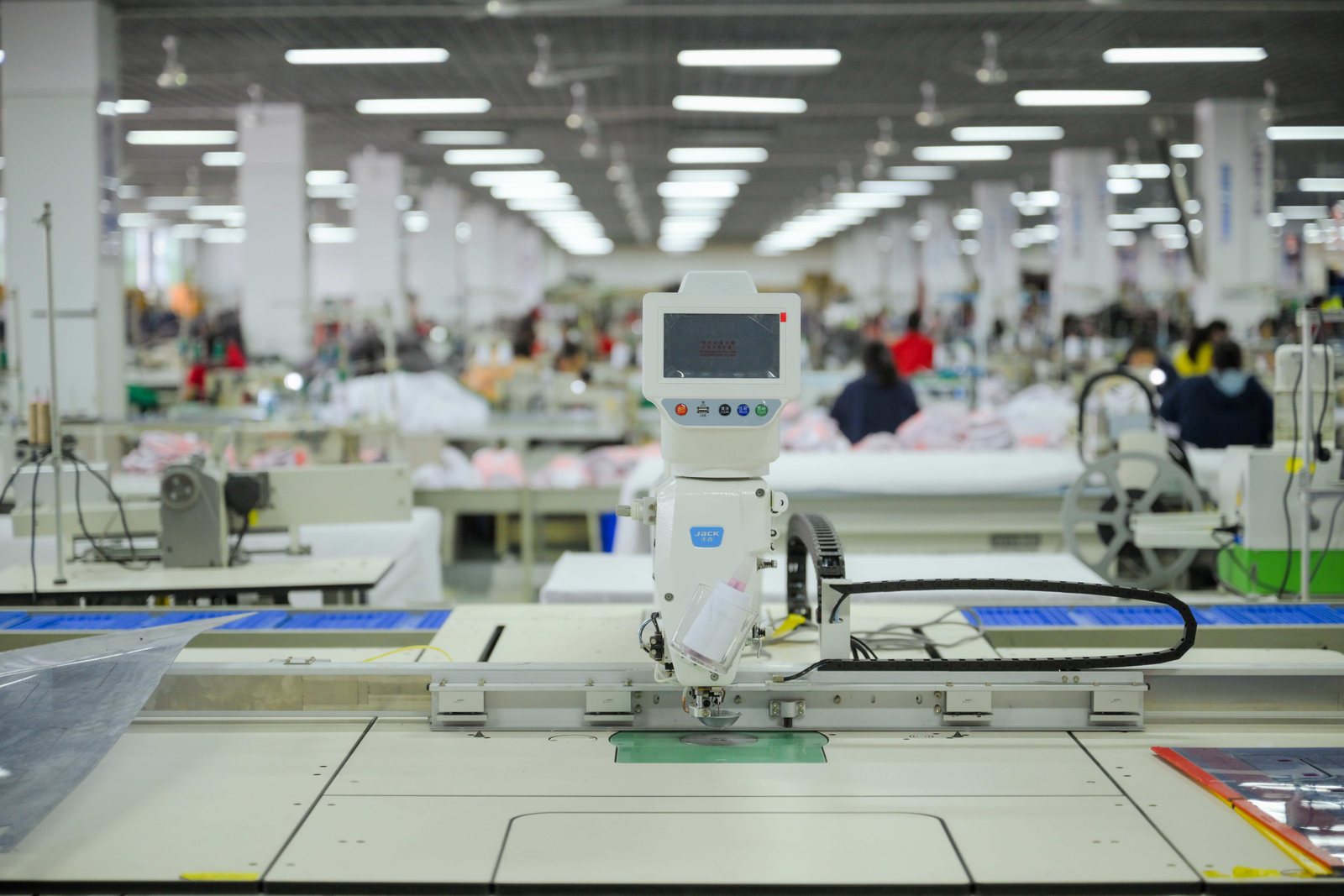
Ask how many sewing lines and machines they run, their monthly output, and how many lines would be dedicated to your order. Confirm they can absorb a repeat order in peak season without pushing your lead time out.
3. Management-system certifications
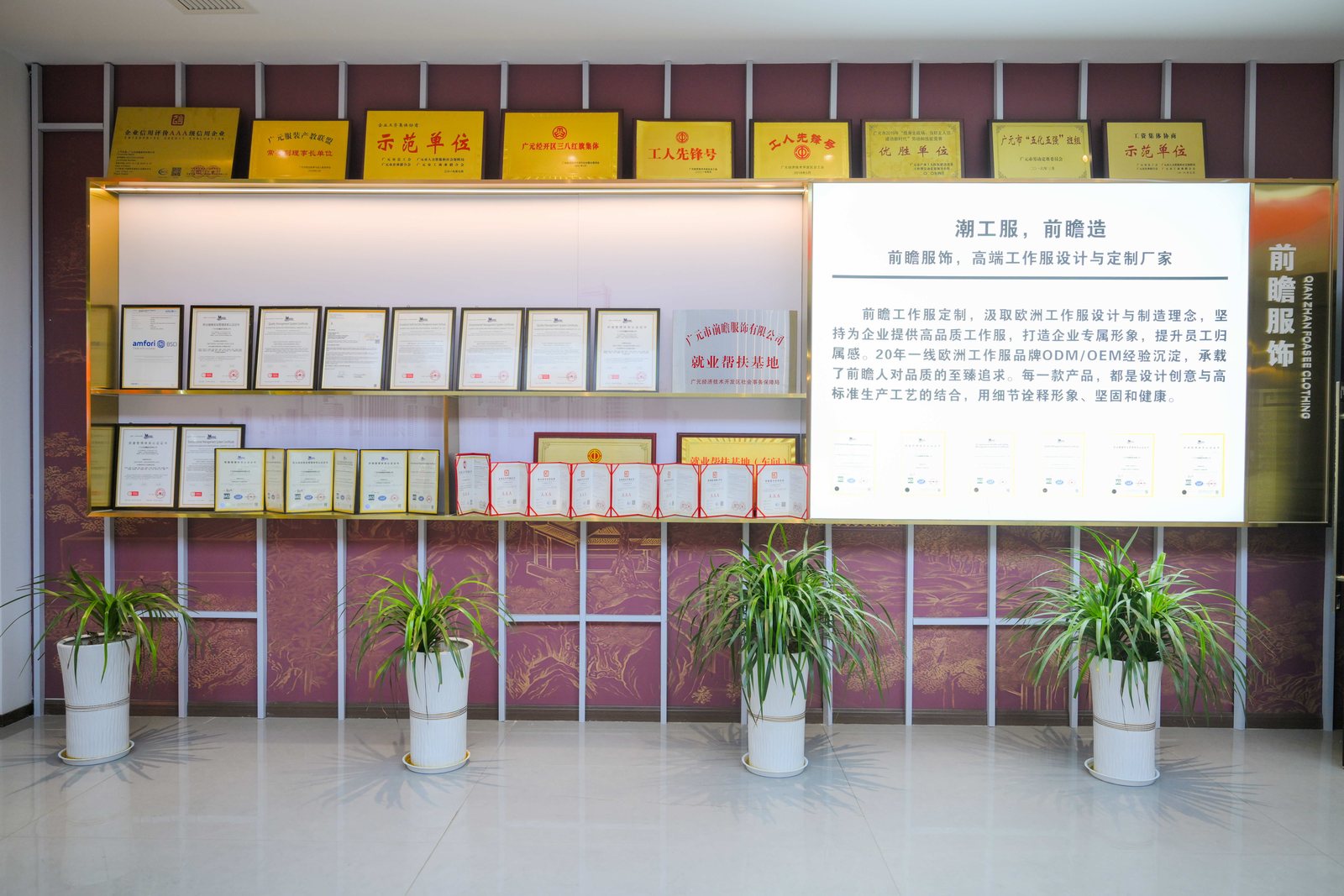
ISO 9001 for quality management, ISO 45001 for occupational health and safety and ISO 14001 for environment are the baseline for a serious export factory. Read the scope statement, not just the logo.
4. Product certifications for your market
Depending on the garment: EN ISO 20471 for high visibility, EN ISO 11612 and EN ISO 11611 for heat and welding, EN 1149 for anti-static, EN 343 for rain, and combined FR plus hi-vis ratings for petrochemical and utility work.
5. In-house production capability
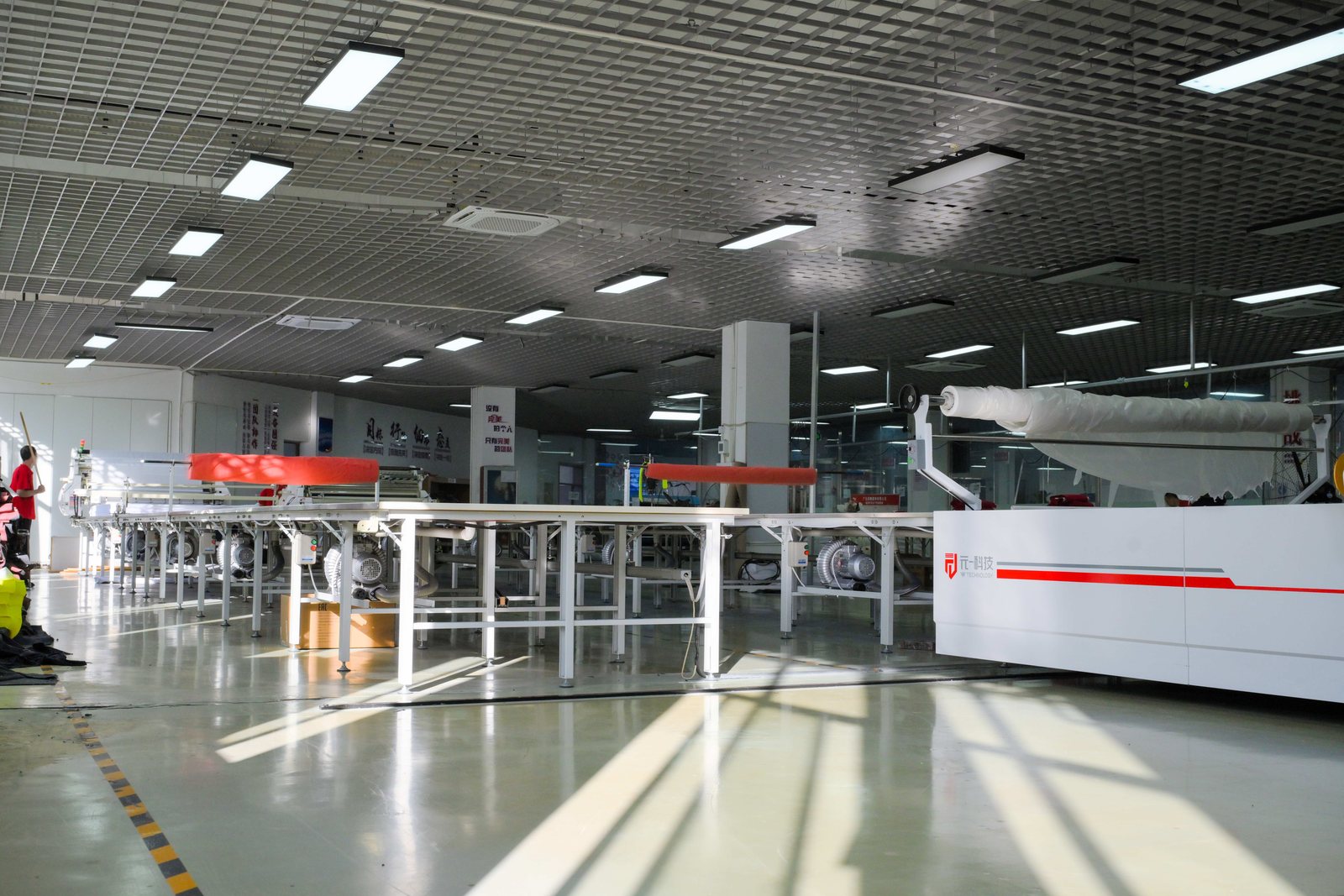
Check whether cutting, sewing, embroidery, screen printing, heat transfer and washing are handled internally. Every outsourced step adds lead time and gives quality a place to drift.
6. Fabric sourcing and testing
Ask which mills they buy from, whether the fabric carries OEKO-TEX Standard 100, and how they verify colourfastness, shrinkage, tear strength and, where relevant, FR or hi-vis performance.
7. Sample room
Whether samples are developed in-house, how many revision rounds are included, and the typical sampling lead time. A factory that cannot make its own samples cannot control the bulk order either.
8. Quality control system
Ask about in-line inspection, the AQL level used for final inspection, whether colour is checked under a light box, and whether inspection records are kept per order.
9. Communication and project management
A named merchandiser, working English or Spanish, defined response times, and a clear process for handling changes or problems mid-production.
10. Commercial terms
MOQ per style and per colour, development or tooling fees, payment terms, and whether quotations are EXW, FOB or CIF. Ask for a cost breakdown by fabric, trims and labour.
Documents to request before you commit
A factory that manages these documents well will produce them quickly. Delays and partial answers are themselves information.
| Document | What it proves | What to ask for |
|---|---|---|
| Business licence | Legal existence and registered capital | Scanned copy with the company chop |
| Export licence and customs records | Real export activity to your region | Certificate plus recent shipment records |
| ISO 9001 | Documented quality management system | Valid certificate and the audit scope |
| ISO 45001 and ISO 14001 | Worker safety and environmental management | Valid certificates |
| amfori BSCI or Sedex audit | Social compliance expected by EU buyers | Full report and the grade achieved |
| OEKO-TEX Standard 100 | Fabric tested for harmful substances | Certificate for the specific fabric used |
| Third-party test reports | Performance of FR, hi-vis or anti-static fabric | Test report from an accredited laboratory |
| Capacity statement | Equipment, headcount and monthly output | Statement issued on company letterhead |
Red flags that should stop a deal
- Certificates that cannot be matched to the factory name or to the specific fabric.
- No in-house cutting or finishing, with every production step subcontracted.
- Reluctance to allow a live video walkthrough or an unannounced visit.
- Quotations with no breakdown by fabric, trims and labour.
- No stated AQL level and no inspection records to show.
- Sizing charts or fabric specifications that change between quotation rounds.
How to verify a factory on site or by video
A walkthrough is about the physical evidence on the floor, not the presentation.
- Follow one order from cutting through sewing, finishing and packing.
- Look at the light box used for colour matching and ask when it was last used.
- Pull inspection records for a recent shipment and check the recorded AQL results.
- Pick a carton at random from the packing area and open it.
- Ask the sewing operators how long they have worked on your product category.
What a well-prepared supplier looks like
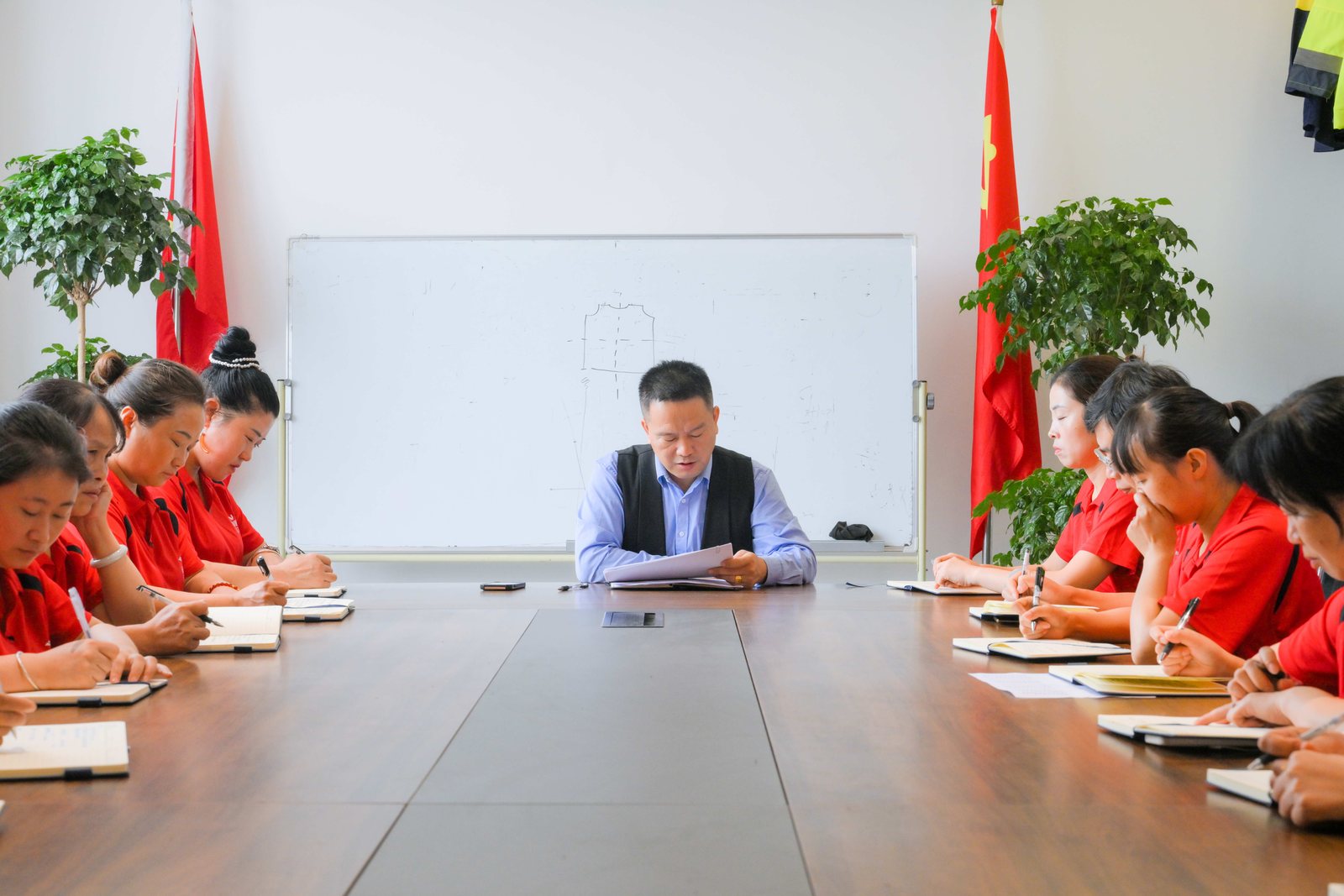
Qianzhan Garment has produced workwear for export markets for more than 20 years from a production base in Guangyuan, Sichuan Province. The factory runs 350 skilled workers and 600 units of production equipment, operates ISO 9001, ISO 45001 and ISO 14001 systems, and holds BSCI, OEKO-TEX and CE certification: the evidence set described in this checklist, ready to review.
The short version
Capacity, certificates, in-house processes and documented quality control cover most of the risk. Everything else can be negotiated. These four cannot be fixed once the order has started.
Request a factory profile and quotation
Send your style, fabric and target market and we will reply with pricing, lead time and the certificates relevant to your market.
